Why team building?

"Why team building?" is a question we are sometimes asked by team members. At first glance understandable, there is so much to do, results are important, so are processes. Of course, so is working together, but paying attention to that costs time and money, and what does it deliver? Our answer is short: "a lot! "More than imagined" we often hear, but that is hindsight. However, maintenance is not only necessary for machines and buildings, you also support a team with 'periodic maintenance'.

Read reviews
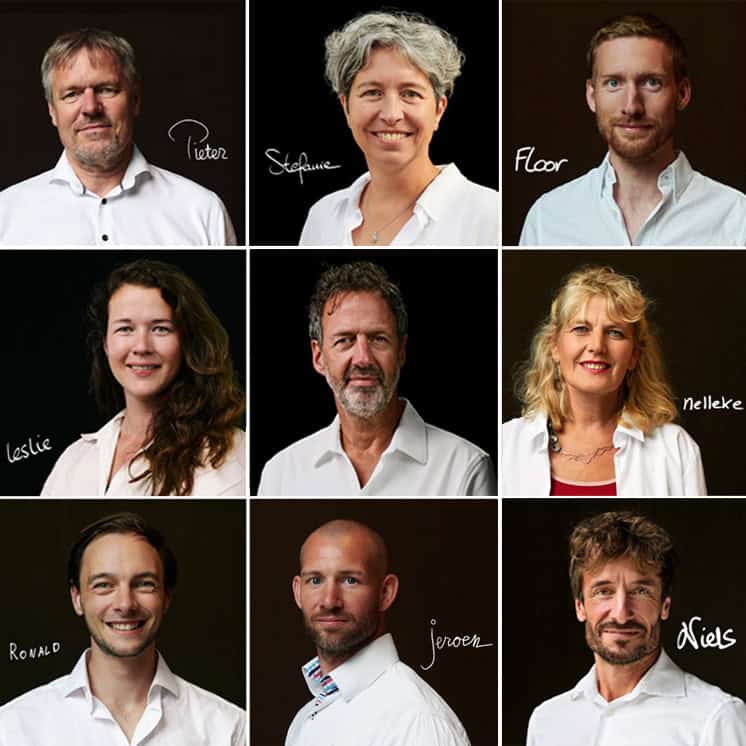
Serious team building trainers

Well-functioning teams meet several conditions, here (under this link) you will find all five of them, and one stands out:

Psychological safety and confidence

If that is not there, colleagues no longer speak to each other.
Learning stops, something that needs improvement does not come up, or slowly, via a diversion.
Learning turns into 'drudgery':

  • Addressing is done sternly, sometimes with irritation and too directly. The other person cannot receive it other than 'on the person'. Resulting in discussion and sometimes (cold) conflict, power politics or cynicism. It becomes increasingly difficult to come out together. Pressure and coercion increase the distance to each other.
  • Colleagues do address each other, the other also nods 'yes', but it remains unclear what that 'yes' means: 'yes, I am going to do it' or 'yes I heard you (and am not going to do it). Both giver and receiver do not feel responsible for the outcome (anymore).
  • An improvement is on the table, but not given an address. Who will do this is then the silent question. No one asks because 'the danger' is that you then get a task added. Maybe someone will pick this up... No one checks. Everyone cooperates to shuffle off tasks. With the result that the improvement does not come (for now).

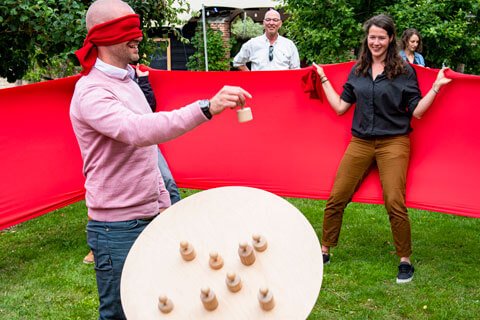
Do you recognise these situations? If so, a day of serious teambuilding a perfect tool for achieving improvements. In smart and challenging team assignments, this team's 'problems' come to the table, no team escapes them, yet the team day remains light-hearted and precisely by tackling it with fun, learning from mistakes made (safely) comes back into the picture.

With more trust in each other, therefore, more effective behaviour; more productivity, lower costs and less downtime, more fun and commitment, more loyalty to company and organisation.

Serious team building is distinct from team building as an outing. The latter form does work only briefly. It has an 'extinction effect'. That extinction effect can certainly be prolonged if the team picks up the themes they (themselves) saw on the team day.

Team building methodology

And sometimes more is needed

We distinguish between three levels of team building:

TEAMBUILDING

  • there is work to do, but everyone is also looking forward to it, looking forward to it and can't wait to go into the next team day full and enthusiastic. Then a team building day with reflection is the best choice!

TEAMTRAINING

  • the team itself recognises that there are issues regarding good communication. Addressing each other can be such an issue, one wonders if this could not be done better with a feedback training.
  • Or silent and direct colleagues become unbalanced, silent colleagues become quieter, direct colleagues more dominant. What can we do about this is then the question. Communicating with style is then the perfect entry point. We give teams insight into each other's style and, above all, why someone uses a preferred style. Discussing this with each other as a team creates much more understanding and also an entry point to use differences in style for good cooperation.

TEAMCOACHING

  • the team itself no longer puts the cause of an unpleasant situation on itself, but judges that other factors need to be solved first before they can take a step themselves. These teams are therefore characterised by the fact that there is first resistance to get to a route start. Therefore, one day is no longer enough to grow as a team, repetition becomes necessary to enable growth again step by step.

We achieve the best results with team coaching. In a team coaching programme, we combine team building, team training and team coaching. Always in line with what the team itself considers necessary. Relief 'we should have done this much earlier' we hear as we go along this journey. And sometimes there is a difficult phase, when everyone wonders 'Is this going to be okay?' This, too, is paradoxically then 'necessary'. It is a vulnerable period and - strangely enough - it is precisely demonstrated vulnerability of team members that helps the group through this phase. Sometimes there are 'hard nuts' to crack. 'Something' is stuck. For this, we then organise additional sessions on request and with the consent of the person(s) involved.

Team building, team training and team coaching are supervised by experienced team coaches. Team building and team training can also be carried out with skilled team trainers.

Team building supports cooperation

Team4Teams supports teams to work towards greater confidence. We do not promise golden mountains, but support the team's own efforts in this area. We believe that everyone is already working on this. Making this energy cooperative is the goal. Within teams, between teams and with leaders outside the team.

Team building for a works council (OR)

Want more connection?

Do employees not dare to address each other sufficiently?
Be asked for feedback, but colleagues shy away from it to avoid a dreaded conflict? Are you not addressing employees so as not to overburden them?
Do team members feel they are not being listened to? These are good reasons why team building is used.

We do team building with two principles:

  1. Coaching of the team is central with individual coaching when needed. Coaching individuals without the team being engaged does not yield as much.
  2. In team building, we 'step out of the delusion of the day' for a while. Getting away from it all creates space for reflection. First with the help of attractive and also challenging team assignments and then a translation to the work situation: What is going well? What can be improved?
Improving overall cooperation

Our offer for teams in brief

We provide customised coaching depending on a team's current situation. Team building is often the first step, while team training and team development contribute to deeper understanding and sustainable results.